7 kW vs 22 kW: Which EV Charger Is Right for Your Home?
A practical breakdown of charging speeds, costs and electrical requirements to help you choose the right charger for your property.
7 min read
UK guide · London & Essex focus
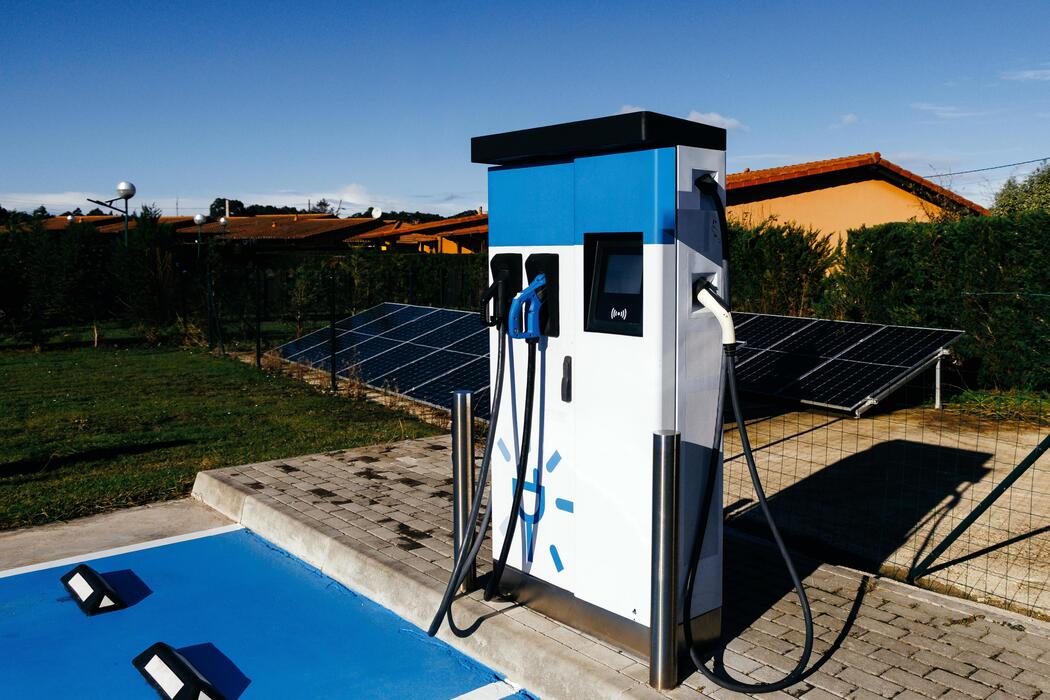
Most homeowners installing an EV charger face the same question: do I need 7 kW or 22 kW? The answer isn’t about future-proofing or bigger-is-better. It’s about what your car can accept, what your electrical supply can deliver, and whether the extra cost makes sense for how you actually charge.
We’ve installed hundreds of home chargers across London and Essex. The vast majority are 7 kW. Not because people are being cautious, because for most domestic situations, 7 kW is the practical ceiling. Here’s why that is, and when 22 kW becomes worth the extra outlay.
Understanding the Power Difference
A 7 kW charger runs on single-phase supply and delivers roughly 30 miles of range per hour. Plug in overnight for eight hours and you’ll add around 240 miles, more than enough for the average UK driver who covers 20 miles a day.
A 22 kW charger requires three-phase supply and can deliver up to 90 miles per hour. Sounds compelling until you realise most electric cars can’t accept 22 kW. The Renault Zoe is one of the few that can. Tesla Model 3, VW ID.3, Kia e-Niro, MG ZS EV, all max out at 7 kW or 11 kW on AC charging. Even if you install a 22 kW unit, your car will only draw what its onboard charger allows.
Three-phase supply is standard in commercial premises but rare in UK homes. If your house doesn’t already have it, you’re looking at a Distribution Network Operator (DNO) application and potentially a new service cable from the street. That can add £2,000 to £5,000 to the installation cost before you’ve even bought the charger.
When 7 kW Makes Sense
For most residential properties, Victorian terraces in Walthamstow, 1930s semis in Woodford, new-build estates in Brentwood, 7 kW is the default choice. Your car charges overnight. You wake up with a full battery. Job done.
Single-phase supply is universal. Installation is straightforward. A 7 kW charger typically costs between £800 and £1,200 fully installed, including the OZEV grant if you’re eligible (up to £350 for flats and rental properties). The unit itself draws 32 amps, well within the capacity of a modern consumer unit with a dedicated circuit.
If you’re doing 200 miles a week, charging twice a week for six hours gives you everything you need. Even high-mileage drivers, 15,000 miles a year, can manage comfortably on 7 kW if they plug in regularly. The charger doesn’t care whether you’re adding 50 miles or 200. It just keeps feeding the battery at a steady rate.
Parking matters more than power. If you’ve got a driveway or designated bay, overnight charging works. If you’re relying on street parking or a space you don’t control, faster charging won’t solve the access problem.
When 22 kW Becomes Worth It
Three-phase makes sense in a few specific scenarios. If you’re running a commercial fleet and need multiple vehicles charged during working hours, 22 kW chargers reduce dwell time. A courier depot with five vans can rotate them through two chargers during the day instead of leaving them plugged in overnight.
Some larger homes, particularly newer builds on commercial-scale developments, already have three-phase supply for heat pumps, workshop equipment or other high-load systems. If the infrastructure’s already there, a 22 kW charger is a marginal cost increase over 7 kW.
Future-proofing is the argument you’ll hear most often. “What if your next car accepts 22 kW?” Fair point, but you’re paying today for a capability you might use in three or four years. The charger will still work fine at 7 kW in the meantime. You’re not losing anything by starting with 7 kW and upgrading later if your circumstances change.
The one exception: if you’re already applying for three-phase supply for other reasons, a large air-source heat pump, a home workshop, a pottery kiln, then adding a 22 kW charger while the DNO’s doing the groundwork makes sense. You’re spreading the fixed cost of the supply upgrade across multiple uses.
Installation Requirements and Costs
A 7 kW installation on single-phase supply is a day’s work. We run a dedicated circuit from your consumer unit to the charger location, fit an RCD protection device if your board doesn’t already have one, mount the unit, test and commission. Most installations in Ilford, Chingford or Loughton are done and dusted in four to six hours.
For 22 kW, you need three-phase supply. If you don’t have it, the DNO application alone takes four to twelve weeks. They’ll assess whether your local transformer can handle the extra load. In areas with older infrastructure, parts of Wanstead, the older streets around South Woodford, you might be asked to contribute toward substation upgrades. That’s rare, but it happens.
Once three-phase is in, the charger installation itself isn’t much more complex than 7 kW. The unit’s bigger, the cable’s heavier, but the principles are identical. The cost difference is mainly in the charger hardware (£1,200 to £2,000 for a decent 22 kW unit) and the DNO fees if you’re bringing in new supply.
Both installations require Building Regulations sign-off and an installation certificate from an OZEV-approved installer. That’s not optional. If you’re claiming the grant or you ever sell the property, you’ll need that paperwork.
Three-Phase Supply: What to Expect
DNO applications typically cost £500 to £1,500 depending on your network operator (UK Power Networks cover most of London and Essex). If new cabling is required from the street, add another £1,500 to £3,500. Total lead time: 8 to 16 weeks from application to energisation. Your existing consumer unit will need replacing with a three-phase board, budget another £800 to £1,200 for that work.
Real-World Charging Patterns
Here’s what actually happens. Most people plug in when they get home, leave the car overnight, unplug in the morning. The charger runs for four to six hours depending on how depleted the battery was. Whether that’s at 7 kW or 22 kW makes no practical difference if you’ve got ten hours available.
The exception is the driver who gets home at 11 pm and needs to leave again at 6 am with a near-empty battery. Seven hours at 7 kW gives you roughly 210 miles. Seven hours at 22 kW could give you 630 miles if your car could accept it, but again, most can’t. Even the cars that do accept 11 kW would only add 385 miles in that window, which is still far more than you’d realistically need for a morning departure.
Smart charging shifts the equation slightly. If you’re on an EV-friendly tariff like Octopus Go (7.5p per kWh for four hours overnight), you want to concentrate your charging into that cheap window. A 22 kW charger could theoretically fill a large battery during those four hours, but only if the car accepts that rate and your supply can deliver it. For most people, 7 kW running from 00:30 to 04:30 adds 120 miles for about £2.50. That’s a week’s commuting for the cost of a coffee.
Making the Decision
Start with your car’s onboard charger capacity. Check the handbook or the manufacturer’s website. If it’s 7 kW or 11 kW, there’s no point installing 22 kW. You won’t use it.
Next, check your electrical supply. Open your consumer unit and look at the main switch. If it says 100 A and you can see two thick cables (live and neutral), you’ve got single-phase. If there are three or four thick cables and the main switch is rated higher, you might have three-phase already. Most domestic properties don’t.
Then think about your charging pattern. If you’ve got overnight access to parking and you’re not doing 300 miles a day, 7 kW will cover you. If you’re running a business with multiple vehicles or you’ve got genuine high-mileage requirements and three-phase supply already on site, 22 kW starts to make sense.
Don’t pay for three-phase supply solely for a charger unless you’ve got another reason to justify it. The payback period is too long. A 7 kW charger installed today will serve you well, and if your needs change in five years, charger technology will have moved on anyway. You can upgrade then with whatever’s current.
What About 11 kW?
There’s a middle ground. Some chargers offer 11 kW on three-phase supply, which is a useful compromise if you’ve already got three-phase for other reasons. It’s faster than 7 kW but doesn’t require the full 32 A per phase that 22 kW demands.
An 11 kW charger adds roughly 45 miles per hour. For a Kia e-Niro with a 64 kWh battery, that’s a full charge in about six hours from empty. It’s a sweet spot for light commercial use, a tradesman with a van who needs a reliable overnight charge, or a care worker doing multiple shifts who might need a quick top-up between runs.
The hardware cost sits between 7 kW and 22 kW, usually around £900 to £1,400 installed. If you’re already paying for three-phase supply, the incremental cost over 7 kW is minimal. But if you’re on single-phase, you can’t install 11 kW, the physics don’t work. You’re limited to 7 kW maximum.
Bottom line: For the overwhelming majority of UK homeowners, 7 kW on single-phase supply is the right answer. It’s affordable, it works with your existing electrical infrastructure, and it delivers a full charge overnight for normal driving patterns. If you’ve already got three-phase supply or you’re running a commercial operation with high-turnover charging needs, 22 kW makes sense. Otherwise, you’re paying a premium for capacity you won’t use. Install what matches your car, your supply and your actual routine, not what sounds impressive on paper.
Need help with this in London or Essex?
Stern MEB is an OZEV-approved, NICEIC-certified electrical contractor based in Woodford Green. We cover home, workplace and commercial electrical work across London and Essex.
Need Help Choosing the Right Charger?
We'll assess your property, check your electrical supply and recommend the charger that fits your car and your budget.
- Free site survey
- Fixed-price quote
- NICEIC certificate
- 12-month warranty
Book a free site survey
London & Essex · same working day response