EICR Testing for London Landlords: What You Actually Need to Know
The legal requirements, realistic timescales and what happens when you fail, from someone who carries out these inspections every week.
7 min read
UK guide · London & Essex focus
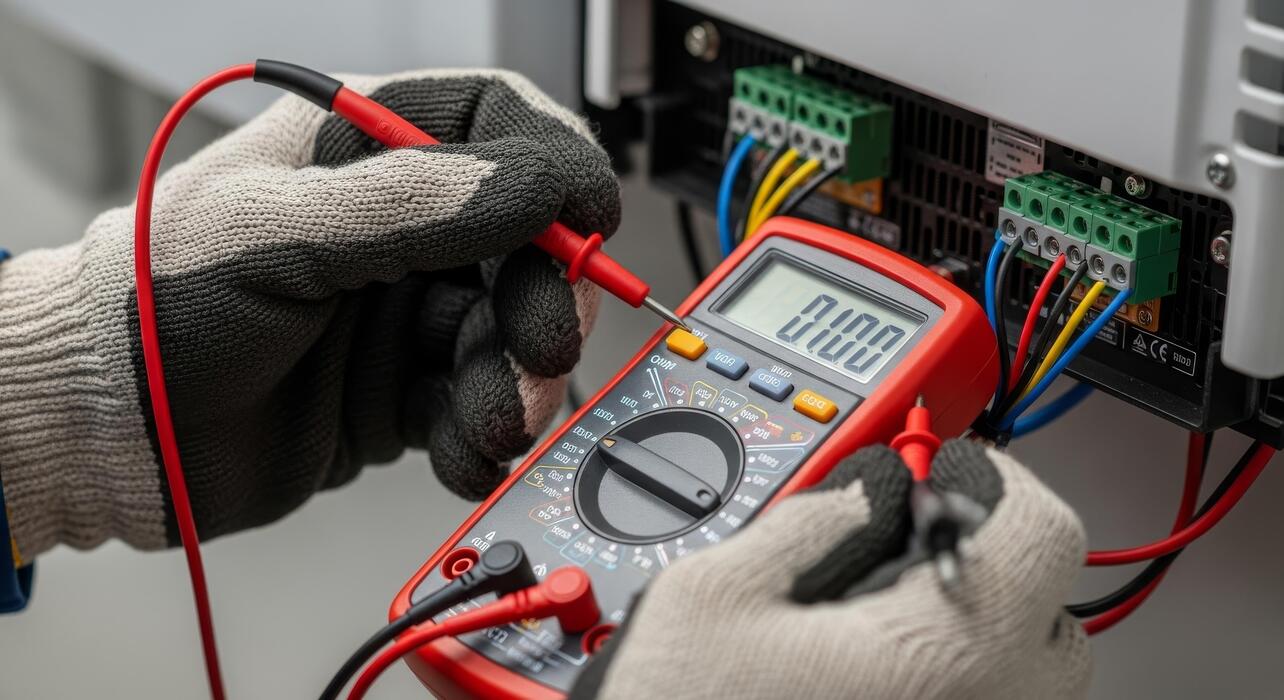
If you rent out property in England, you’ve needed an Electrical Installation Condition Report every five years since June 2020. Not a recommendation. Not best practice. Legal requirement under the Electrical Safety Standards in the Private Rented Sector (England) Regulations 2020.
The fine for non-compliance can reach £30,000. More importantly, your insurance becomes questionable and you’re exposed if something goes wrong. I’ve been carrying out EICRs across London and Essex for two decades. Here’s what landlords actually need to understand.
What an EICR Actually Tests
An EICR is a detailed inspection and test of every accessible circuit in your property. We’re checking whether the electrical installation is safe for continued use. That means opening consumer units, testing RCD trip times, measuring earth loop impedance, inspecting socket condition, verifying bonding to gas and water, checking for overloaded circuits.
It’s not a PAT test, we don’t test your tenant’s kettle. It’s the fixed wiring and permanent equipment: sockets, lights, cooker circuits, shower pulls, consumer unit, earthing arrangements. The whole installation gets coded against BS 7671 (the wiring regulations).
The inspection takes between two and four hours for a typical two-bed flat. Larger properties, older installations or places with multiple consumer units take longer. We need access to every room, the loft space if circuits run there, and any outbuildings with power.
The Three-Code System You Need to Understand
Every defect found gets assigned a code. These codes determine what happens next.
C1, Danger present. Immediate risk of injury. The installation is unsafe to use. Examples: exposed live parts, missing earth bonding to gas or water, dangerous DIY work. If we find a C1, we have to isolate that circuit immediately. You cannot legally rent the property until it’s fixed and re-tested.
C2, Potentially dangerous. Urgent remedial action required. This is the grey area that causes arguments. Lack of RCD protection on sockets, circuits not correctly identified, inadequate earthing, old rubber cable still in use. Technically you can still rent with C2 codes, but your solicitor will tell you not to. Most mortgage lenders and insurers won’t touch you with active C2s.
C3, Improvement recommended. Not compliant with current standards but not immediately dangerous. Old-style rewireable fuses, lack of surge protection, sockets too close to sinks. You can rent with C3 codes. They’re noted for future work.
A satisfactory report has no C1 or C2 codes. That’s what you’re aiming for. Anything else requires remedial work before you can honestly say the installation is safe.
The RCD Protection Issue
The single most common C2 we find in older properties is lack of RCD protection on socket circuits. If your consumer unit was installed before the mid-2000s, it probably doesn’t have RCDs on everything. Current regs require 30mA RCD protection on all socket outlets and any circuit in a bathroom. Upgrading the consumer unit typically costs £600, £900 depending on size and whether the meter tails need upgrading too.
Realistic Timescales and Access Requirements
You need to give your tenant at least 24 hours’ written notice before the inspection. In practice, booking two weeks ahead works better, gives them time to tidy up and ensures they’re actually there.
We need the property empty of people during testing. Tenants can be present but they can’t be working from home in the room we’re testing. Power will be off to individual circuits for 10, 20 minutes at a time. The whole property might lose power briefly when we’re testing RCD operation.
If you’ve got a tenant who works nights or has young children, mornings are usually easier. We can work around most situations but “just let yourself in while they’re at work” doesn’t fly anymore, not since COVID, and not when we need to kill power to the fridge.
For HMOs (houses in multiple occupation), access is harder. You need every room available on the same day. That means coordinating five or six tenants, all with different schedules. Book a month ahead for HMOs. Seriously.
What Happens When You Fail
About 40% of EICRs we carry out on older London properties come back with at least one C2 code. That’s not a disaster. It’s information.
You get a detailed report listing every defect with its code and location. You then have 28 days to carry out remedial work and provide evidence to your tenant. The regulations don’t specify who does the remedial work, doesn’t have to be the same electrician who did the EICR, but it must be done by someone competent.
After remedial work, you need either a new full EICR or a Minor Works Certificate covering the repairs. Most electricians will do a partial re-test focusing on the circuits that were worked on. If the only issue was lack of RCD protection and we’ve upgraded your consumer unit, we’re not going to re-test every socket in the building.
The local authority can get involved if your tenant complains. They can serve a remedial notice requiring you to fix defects within 28 days. Ignore that and you’re looking at a fine up to £30,000. They can also do the work themselves and bill you for it.
Common Issues in London Housing Stock
Victorian and Edwardian conversions are the worst. You’ll often find three or four layers of wiring from different decades, all still live. Original 1970s rewires sitting alongside 1990s kitchen extensions and 2010s bathroom upgrades. The earthing arrangements are frequently a mess because nobody’s ever properly integrated the old and new work.
1930s semis usually have better bones but the wiring is often original. If you’re buying a rental property built before 1970 and there’s no evidence of a rewire, budget £4,000, £7,000 for a full rewire on top of the purchase price. You’ll need it within five years anyway.
Modern flats, anything built after 2005, usually sail through. The issue there is access to communal areas. If the building has shared supplies or your consumer unit is in a locked cupboard controlled by the freeholder, you need to coordinate access before we arrive. I’ve turned up to jobs where the landlord didn’t realise their consumer unit was in a basement plant room that needs the managing agent present.
| Property Type | Typical Issues | Likely Cost to Remediate |
|---|---|---|
| Pre-1970 terrace/semi | No RCD protection, old wiring, inadequate earthing | £600, £900 (consumer unit upgrade) or £4,000+ (full rewire) |
| 1970s, 1990s flat | Lack of RCD protection, poor labelling, missing bonding | £400, £700 |
| Converted Victorian property | Mixed-era wiring, shared services, earthing issues | £800, £2,500 depending on extent |
| Post-2005 new-build | Usually satisfactory; occasional labelling or documentation issues | £0, £200 |
The Paperwork Trail You Must Keep
You need to provide a copy of the EICR to your tenant within 28 days of the inspection. If it’s a new tenancy, you must provide it before they move in. You also need to provide a copy to your local authority if they ask for it.
Keep every EICR for the duration of the tenancy plus at least two years after. If there’s ever a claim, insurance, injury, legal dispute, you’ll need to prove the installation was tested and safe. “I’m sure we had one done” doesn’t cut it.
If you use a letting agent, make sure they’re actually filing these reports properly. I’ve seen cases where the landlord paid for the EICR, the agent received it, and it then vanished into an email folder somewhere. The landlord still gets fined because they can’t produce it when the council asks.
The EICR must be carried out by a qualified electrician. That means someone on a competent person scheme, NICEIC, NAPIT, ELECSA, Stroma. Check their registration before you book. A spark who’s qualified to do installation work isn’t automatically qualified to issue EICRs. Different skillset, different assessment.
What It Actually Costs
For a standard two-bed flat in London, expect to pay £180, £250 for the EICR itself. Three-bed houses run £220, £300. Larger properties, HMOs, commercial units, price goes up with circuit count and complexity.
Anyone quoting you £99 for an EICR is either cutting corners or using it as a loss leader to upsell remedial work at inflated prices. A thorough inspection takes time. You’re paying for two to four hours of a qualified electrician’s time plus the insurance and accreditation that backs up that report.
If you need remedial work, get a fixed quote before committing. “It’ll probably be around £500” isn’t good enough. You need to know exactly what’s being done and what it costs. Most remedial work on a failed EICR is consumer unit upgrades or additional RCD protection, that’s a defined scope of work with a clear price.
Bottom line: The EICR requirement isn’t going away and enforcement is getting stricter. If you’re a landlord in London or Essex, you need a valid EICR dated within the last five years for every property you rent. Budget for it, keep the paperwork, and fix any C2 codes immediately. Trying to dodge it or hoping your tenant won’t notice is a false economy that’ll cost you far more when it catches up with you. Get it done properly by someone who knows what they’re looking at, and you’ve got five years of compliance and peace of mind.
Need help with this in London or Essex?
Stern MEB is an OZEV-approved, NICEIC-certified electrical contractor based in Woodford Green. We cover home, workplace and commercial electrical work across London and Essex.
Need an EICR for Your Rental Property?
We carry out landlord EICRs across London and Essex every week, thorough inspections, clear reports, and honest advice on any remedial work needed.
- Free site survey
- Fixed-price quote
- NICEIC certificate
- 12-month warranty
Book a free site survey
London & Essex · same working day response