PAT Testing in the UK: What's Actually Required (and What Isn't)
Cut through the confusion about portable appliance testing, what the law says, who needs it, and how often you really need to do it.
7 min read
UK guide · London & Essex focus
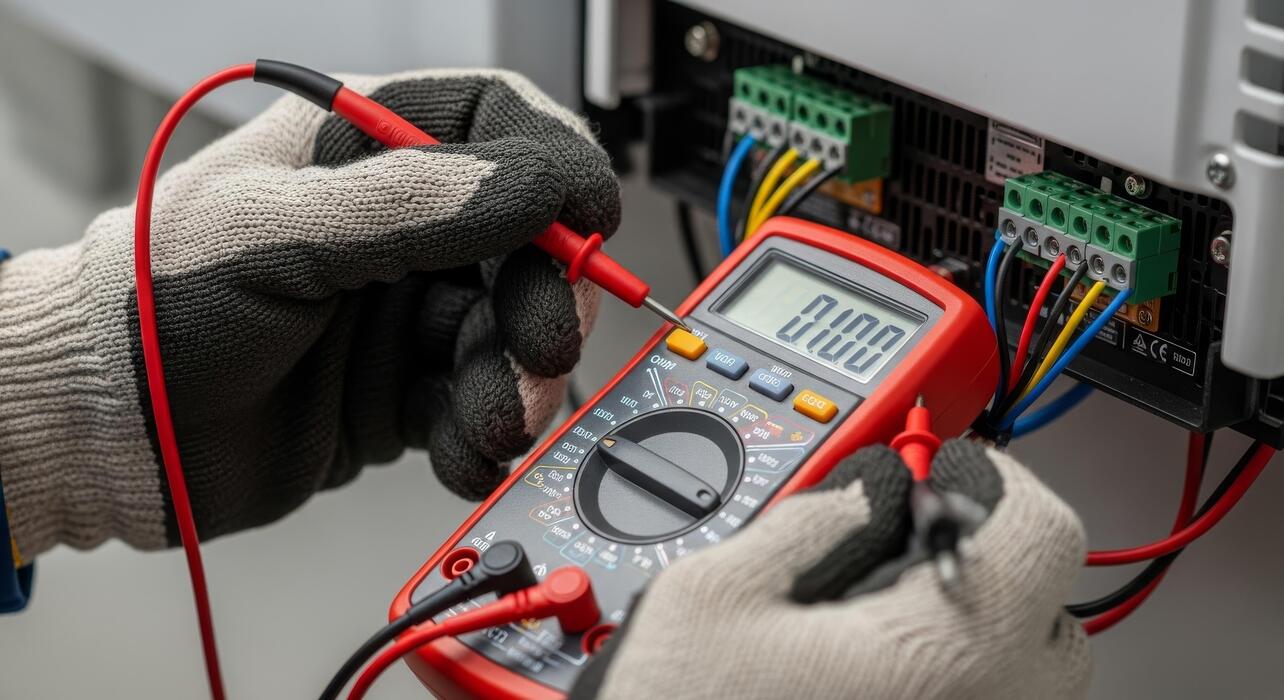
PAT testing gets talked about like it’s a legal requirement written in stone. It isn’t. There’s no law that says “thou shalt PAT test every 12 months”, but there is a legal duty to maintain electrical equipment safely, and PAT testing is the most practical way to prove you’re doing it.
That distinction matters. Because too many businesses either panic-buy annual contracts they don’t need, or ignore the whole thing until something goes wrong. Neither approach is sensible.
We’ve been doing electrical testing across London and Essex for two decades. Offices in Canary Wharf, warehouses around the A12, care homes in Redbridge, shops on high streets from Walthamstow to Brentwood. The kit varies wildly, but the principles don’t change.
Here’s what actually matters.
What the Law Actually Says
The Electricity at Work Regulations 1989 put the duty on employers and landlords to ensure electrical systems and equipment are “maintained so as to prevent danger”. That’s it. No mention of PAT testing by name, no prescribed intervals, no colour-coded stickers.
The Health and Safety Executive’s guidance (HSR25) clarifies that maintenance includes inspection and testing “where appropriate”. Appropriate depends on the equipment type, how it’s used, and the environment it’s in. A kettle in a busy office kitchen needs checking more often than a desktop PC that never moves.
For landlords, the same principle applies under the Housing Act 2004 and associated regulations. You’re responsible for the safety of electrical installations and any appliances you supply. A rental flat with a washing machine and cooker? Those are your responsibility. The tenant’s hairdryer? Not unless you supplied it.
The legal position is clear: you must maintain equipment safely. PAT testing is simply the recognised method of proving you’ve done so.
What PAT Testing Actually Covers
Portable Appliance Testing is a misnomer. It’s not just things you can carry. It covers anything with a plug that isn’t part of the fixed installation, so yes, kettles and laptops, but also photocopiers, vending machines, and that ancient fridge in the warehouse that nobody wants to unplug because it might not start again.
The test itself has two parts: visual inspection and electrical testing. Visual comes first and catches most faults, damaged cables, cracked plugs, missing screws on casings, burn marks around sockets. You’re looking for anything obviously wrong.
The electrical tests measure earth continuity, insulation resistance, and (where relevant) earth leakage and polarity. The tester applies specific voltages and checks the readings against BS 7671 requirements. Class I equipment (metal-cased, earthed) gets the full suite. Class II (double-insulated, plastic) skips the earth test because there isn’t one.
Equipment is then labelled with a test date and next test due date. The label proves testing happened, but more importantly, the register you keep (and you must keep one) shows what was tested, when, by whom, and what the results were.
How Often You Actually Need to Test
This is where most confusion lives. The HSE publishes suggested frequencies in their guidance, but they’re starting points, not rules. A construction site with kit dragged through mud daily? Test every three months. An office with desktop equipment that never moves? Every two to four years is defensible.
Here’s the HSE’s baseline guidance:
- Construction sites (110V equipment): three months
- Industrial/commercial (moved regularly): six to 12 months
- IT equipment (rarely moved): up to 48 months
- Hotels, guest houses (portable equipment): 12 months
- Schools: 12 months for portable, up to 48 months for fixed
- Offices (low-risk equipment): up to 48 months
But those intervals assume competent users and reasonable environments. If your staff routinely abuse kit, or you’re in a harsh environment (dusty, damp, corrosive), test more often. If you’re low-risk and can demonstrate good maintenance culture, you can justify longer intervals, but document your reasoning.
We’ve seen annual contracts sold to offices testing brand-new IT kit every year when four-yearly would be fine. Equally, we’ve walked into warehouses where nobody’s tested anything in a decade and half the leads are held together with gaffer tape. Neither is acceptable.
Who Can Actually Do PAT Testing
Anyone “competent”. That’s the legal term. It doesn’t mean electrically qualified, it means trained, experienced, and able to recognise when something’s unsafe. For basic visual checks, a responsible employee who’s been properly trained can do it. For the electrical testing, you want someone who understands what the numbers mean.
Many businesses use their in-house maintenance team for routine testing, bringing in qualified contractors for annual audits or complex equipment. Others outsource the lot. Both approaches work if the people involved know what they’re doing.
The tester must be able to interpret results, identify trends (insulation resistance dropping year-on-year, for example), and make competent repair-or-replace decisions. They must also keep proper records, because if there’s an incident, the HSE or an insurance investigator will ask for them.
For landlords, the same applies. You can do your own PAT testing if you’re competent, but given the liability if something goes wrong, most sensibly use a qualified contractor and keep the paperwork.
What Equipment You Can Skip
Not everything with a plug needs formal PAT testing. The HSE is clear: low-risk equipment used by competent people in low-risk environments can be managed with user checks alone.
Examples: a desktop PC in an office that’s never moved. A phone charger. A desk lamp. These are Class II, double-insulated, low-power, and stationary. Visual checks by users, “does it look damaged?”, are proportionate.
Contrast that with a floor buffer used daily by cleaners, dragged across thresholds, knocked into skirting boards, stored in a damp cupboard. That’s high-risk and needs regular formal testing.
The decision tree is simple: what’s the risk of the equipment becoming unsafe, and what’s the consequence if it does? A faulty phone charger might give someone a tingle. A faulty industrial vacuum used in a warehouse could kill someone. Test accordingly.
Battery-powered equipment (cordless drills, rechargeable torches) doesn’t need PAT testing because there’s no mains voltage in use. But the charger does.
Records, Labels, and Proving Compliance
The test itself is half the job. The other half is documentation. You need a register showing what equipment you have, when it was tested, who tested it, and what the outcome was. Pass, fail, or remedial action required.
That register can be a spreadsheet, a dedicated software system, or even a written log if you’ve only got a handful of items. Format doesn’t matter; completeness does. Every item must have a unique identifier (asset number, serial number, or description detailed enough to identify it), a test date, a result, and a next-test-due date.
The coloured labels (green for pass, usually) are a convenience, not a legal requirement. They let users and inspectors quickly see what’s current. But the label isn’t proof, the register is. We’ve seen kit with current labels that was never actually tested, and kit without labels that’s perfectly compliant because the paperwork’s solid.
Keep records for at least two years; longer is better. If there’s an incident, you need to prove the equipment was maintained. “We definitely tested it” won’t cut it. A dated, signed register will.
Common Mistakes That Create Real Risk
The biggest mistake is confusing compliance theatre with actual safety. Sticking labels on everything annually doesn’t make you safe if nobody’s actually checking the kit properly or acting on failures.
Second: testing everything on the same rigid schedule. It’s administratively tidy but technically daft. High-risk kit needs frequent checks; low-risk kit doesn’t. A blended approach, quarterly for construction tools, annual for office portables, four-yearly for static IT, makes far more sense.
Third: ignoring user checks. Formal PAT testing is periodic. Daily use is continuous. Train your people to spot obvious faults (frayed cables, cracked plugs, strange smells, intermittent operation) and report them immediately. A kettle that’s fine in January can develop a fatal fault by March.
Fourth: assuming new equipment is safe and skipping the initial test. Kit can be damaged in transit, incorrectly assembled, or faulty from the factory. Test it before first use, even if it’s fresh out of the box.
Finally: keeping failed equipment in service “until we can afford to replace it”. If it’s failed a PAT test, it’s unsafe. Label it clearly, remove it from use, and replace or repair it. Anything else is gambling with someone’s life.
What It Actually Costs
PAT testing is charged per item, per hour, or as a fixed site visit. Typical rates in London and Essex run £1, £3 per item for volume work, or £150, £300 for a half-day callout covering a small office. Complex or specialist equipment costs more because it takes longer to test properly.
For a 20-person office with 80 items (computers, monitors, printers, kettles, fans), expect to pay around £150, £250 for annual testing. A warehouse with 200 items might be £400, £600. A hotel with 500 items across multiple floors could run to £1,500+.
DIY testing is cheaper if you’ve got competent staff and can justify the equipment cost (a decent PAT tester costs £300, £800). But you still need to train people, maintain records, and accept the liability if something’s missed.
Most businesses find that outsourcing to a qualified contractor, who brings insurance, experience, and audit-trail documentation, is worth the cost. Especially in London and Essex, where enforcement is tighter and the consequences of getting it wrong are higher.
What About Landlords?
If you’re letting residential property and supplying appliances (cooker, washing machine, fridge), you’re responsible for their safety. PAT testing isn’t legally mandated for domestic lettings, but it’s the simplest way to prove you’ve met your duty under the Housing Act. Most landlord insurers expect it. Test supplied appliances before a tenancy starts, then every 12 months or at tenant changeover, whichever comes first.
Bottom Line
PAT testing isn’t a legal requirement, but maintaining electrical equipment safely is, and testing is how you prove you’re doing it. How often you test depends on risk, not arbitrary schedules. High-use, high-risk kit needs frequent checks; low-risk static equipment doesn’t. Keep proper records, act on failures immediately, and train your people to spot obvious faults between formal tests. Done properly, PAT testing is straightforward, proportionate, and keeps people safe. Done badly, or not at all, it’s a liability waiting to happen.
Need help with this in London or Essex?
Stern MEB is an OZEV-approved, NICEIC-certified electrical contractor based in Woodford Green. We cover home, workplace and commercial electrical work across London and Essex.
Need PAT Testing in London or Essex?
We test electrical equipment across commercial, industrial, and residential sites, with clear reporting, sensible scheduling, and no overselling.
- Free site survey
- Fixed-price quote
- NICEIC certificate
- 12-month warranty
Book a free site survey
London & Essex · same working day response